CHDR Academy: education in the service of improving pharmacology and drug development
Developing people has always been one of the pillars of CHDR's strategy. The newly established CHDR Academy will bring together all educational activities in the interest of the organisation and society.
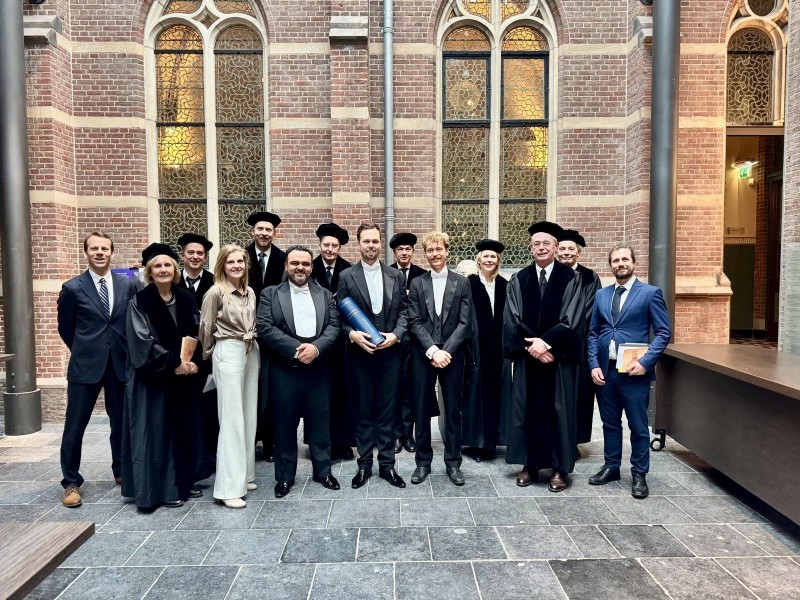
Education gets top priority at CHDR, providing pharmacology teaching for (graduate) students at Leiden University, Leiden University Medical Center and the Leiden University of Applied Sciences. The organisation is a popular internship location for students from various disciplines. Focus on education also means providing opportunities for CHDR staff to develop themselves. This includes the post-graduate education of Clinical Scientists who are physicians and pharmacists trained to become clinical pharmacologists. As PhD candidates, they deliver high-quality dissertations. In 2024, a record number of nine CHDR employees obtained their PhD.
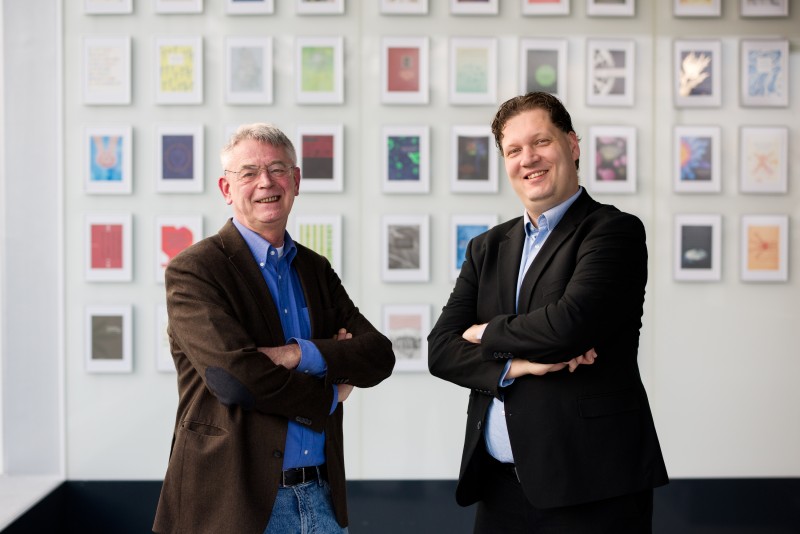
CHDR’s education efforts are aimed at the many different professions represented in our staff. Employees are given the opportunity to develop themselves, enabling them to keep up with the most recent developments in their field or prepare for a different role within the organisation. In 2024, CHDR Academy was established, with Professor Koos Burggraaf as its Dean. to optimise synergy and innovate these various educational activities.
Innovation
‘It is my goal to evaluate all our educational programs and bring more consistency to them’, says Burggraaf, who was CHDR’s CEO until the beginning of 2024. ‘Together with our Director of Education Dr Jeroen van Smeden, we have defined as our aim to innovate our educational programs both in terms of content and the way they are presented didactically. There are of course many developments in the field of pharmacology and drug development, such as the application of artificial intelligence, novel treatments, for example Advanced Therapy Medicinal Products, and novel formulations’.
‘Another theme that I’d like to draw attention to is patient stratification and phenotyping. We know from our research and from clinical practice that patients show a variety of pharmacodynamic responses to the same compound. But in current practice, many treatments still follow a ‘one size fits all’ approach. Some efforts are made to predict the pharmacokinetics by genotyping, which is obviously fine, but insufficient. However, remarkably little attention is given to the variability in drug response, even though pharmacodynamics explains approximately 75% of the overall variability. Pathophysiology is often still purely descriptive, but I think we should seek ways to increase and apply our knowledge of the pertinent underlying disease mechanisms. This will be an important first step towards more tailored therapies and may be a crucial step to the ideal of personalised medicine. All this is, of course, important knowledge to share with our students.’
Sharing and serving
According to Burggraaf, not only is the content of education changing, but also its form deserves an upgrade. ‘The way in which people acquire and share knowledge is changing rapidly. Students and professionals want more demand-driven, case-driven education. And more modern ways of teaching also require different ways of testing.’ Burggraaf advocates a shift from exams and written presentations on factual knowledge to real understanding of concepts and to present these in readily accessible forms such as videos and podcasts. ‘The advantage of this approach is that knowledge is also made accessible to others, within our own organisation and beyond.’
Van Smeden shares his vision: ‘Already, we are increasingly approached by other universities and organisations to contribute to education in pharmacology and drug development. If it fits in with CHDR’s strategy and with our possibilities and objectives, we will gladly contribute to the efforts of our colleagues in those organisations. Our TRC-P teaching platform (https://trc-p.nl/), for example, is increasingly used in pharmacology education in the Netherlands and abroad.’
Van Smeden and Burggraaf will evaluate the entire educational programme in the coming years and update it where necessary. They will also look for possible overlaps in the education for students and groups of employees, including clinical staff, PhD candidates and clinical pharmacologists in training. Van Smeden: ‘Much of the material, such as the TRC-P, is suitable for various target groups. And sometimes a study assignment for clinical pharmacologists, for example, can yield useful study material for other groups. I am really excited that with the CHDR Academy, we are putting extra effort into developing people, for our own future and that of drug development in general.’
Interested in learning more?
More articles from Developing people